As the summer sun warms the northern hemisphere, travelers with a yearning for vast open spaces often find themselves drawn to China's magnificent grasslands. Two names consistently rise to the top of any itinerary: Hulunbuir and Xilin Gol. These are not merely destinations; they are vast, breathing ecosystems, each offering a profoundly different interpretation of the classic Mongolian steppe experience. Choosing between them is less about finding a "better" option and more about discerning which landscape, culture, and pace resonates with the spirit of your journey.
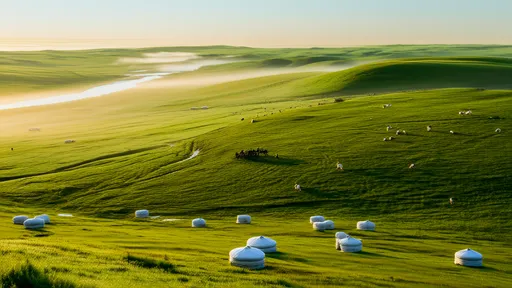
Hulunbuir, nestled in the far northeastern corner of Inner Mongolia, is a place of epic scale and staggering diversity. It is often described as one of the last great unspoiled grasslands on earth, a claim that feels entirely credible when you stand amidst its endless green waves. The terrain here is not monotonous; it is a rich tapestry woven from meadows, forests, rivers, and lakes. The grandeur of Hulunbuir is its defining characteristic. The horizon seems to stretch into infinity, broken only by the gentle roll of hills and the occasional herd of horses or sheep moving like a slow-flowing river across the land.
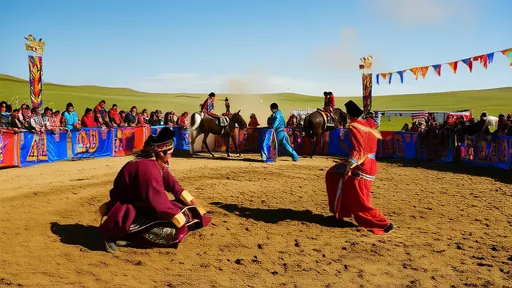
The cultural heartbeat of Hulunbuir is strongly influenced by its diverse inhabitants, including ethnic Mongols, Russians, and Evenki people. This blend creates a unique cultural fabric. You might witness traditional Mongolian throat singing one evening and taste Russian-influenced cuisine the next. A visit here is often centered around the Nadam Festival, a vibrant display of horsemanship, wrestling, and archery that feels deeply authentic and community-oriented. The key towns, like Hailar, serve as gateways, but the true magic lies in staying in a yurt at a family-run ranch, where the hospitality is as vast as the scenery. Waking up to the sound of neighing horses and the smell of milk tea is an experience that lingers long after you depart.
In contrast, Xilin Gol, located closer to Beijing, presents a more archetypal and accessible vision of the grassland. Its beauty is one of pure, unadulterated steppe, a golden-green sea of grass that has supported nomadic life for millennia. While still expansive, the scale feels more intimate and manageable, making it a superb choice for those with limited time or those seeking a slightly less rugged adventure. The landscape is famously captured in the poetic phrase "the sky like a dome, covering the four wild fields," and it truly feels like a place where the sky meets the earth in a perfect, unbroken circle.
The cultural experience in Xilin Gol is intensely focused on the deep, well-preserved traditions of the Mongolian people. This is a stronghold of classic nomadic culture, and visitors are immersed in it. The grasslands are part of the UNESCO Biosphere Reserve, and efforts to maintain the traditional way of life are evident. You are more likely to encounter families who have herded sheep and cattle on these lands for generations, offering a glimpse into a rhythm of life dictated by the seasons and the herds. The experience here is less about spectacle and more about authentic immersion—learning to milk a cow, trying your hand at making traditional cheese, or simply sitting in silence as a herder tends to his animals under the immense blue sky.
When it comes to practicalities, the differences become even clearer. Reaching Hulunbuir is a journey in itself. Most travelers fly into Hailar Dongshan Airport, which can require a connecting flight from a major hub like Beijing or Harbin. Once there, exploring the vastness necessitates either a pre-arranged tour with a driver or renting a car for those comfortable with long-distance driving on often-remote roads. This logistical effort is rewarded with a sense of true remoteness and adventure.
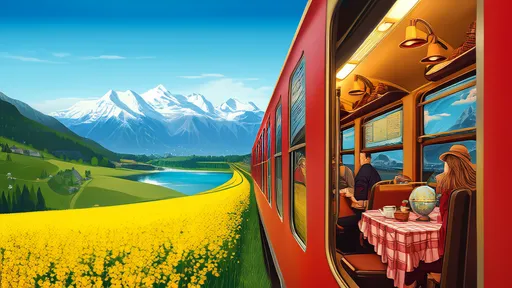
Xilin Gol, by comparison, is significantly more accessible. It is conveniently linked by train and bus services from Beijing, making a long weekend trip entirely feasible. The town of Xilinhot acts as the main hub, and from there, organized tours to nearby grassland resorts and ranches are plentiful and straightforward to arrange. This ease of access does mean that certain popular spots can feel more developed for tourism, but it also allows for a smoother, more comfortable travel experience.
Ultimately, the choice between these two magnificent regions boils down to what you seek from your summer grassland odyssey. If your soul yearns for an expedition into the wild, if you are compelled by immense scale, ecological diversity, and a blend of cultures, and if you have the time and spirit for a more significant logistical undertaking, then Hulunbuir is your calling. It is the destination for the explorer, the photographer, and the traveler who wants to feel truly, wonderfully small in a vast world.
Conversely, if you desire a deep, concentrated dose of traditional nomadic culture, value ease of access, and prefer a journey that is more about cultural connection than conquering distances, then Xilin Gol will captivate you. It offers a purer, more intimate portrait of the steppe, allowing you to connect with its people and traditions on a profound level without venturing to the very edge of the map. Whichever you choose, both promise an unforgettable summer under the endless Mongolian sky, leaving you with memories of rolling green hills and the enduring spirit of the grassland people.
By /Aug 22, 2025

By /Aug 22, 2025
By /Aug 22, 2025
By /Aug 22, 2025

By /Aug 22, 2025
By /Aug 22, 2025

By /Aug 22, 2025
By /Aug 22, 2025

By /Aug 22, 2025
By /Aug 22, 2025
By /Aug 22, 2025
By /Aug 22, 2025
By /Aug 22, 2025

By /Aug 22, 2025

By /Aug 22, 2025
By /Aug 22, 2025

By /Aug 22, 2025
By /Aug 22, 2025

By /Aug 22, 2025

By /Aug 22, 2025
