In the dappled sunlight of a flowering meadow, a low hum signals the presence of one of nature's most sophisticated civilizations. The honey bee colony is not merely a collection of insects; it is a superorganism, a single entity composed of thousands of individuals functioning with a precision that has fascinated philosophers, scientists, and poets for millennia. This intricate society operates under a rigid, yet remarkably efficient, caste system that dictates the role and life of every member within the waxen walls of the hive. It is a world of pheromones, dutiful labor, and a single, absolute monarch, offering a profound glimpse into the complexities of social evolution.
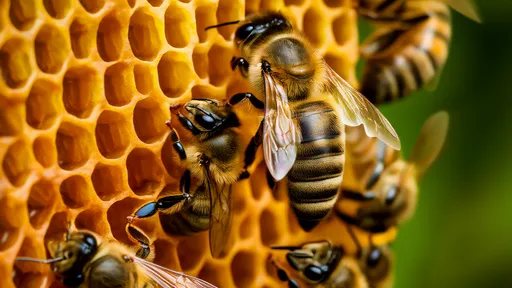
The undisputed heart of this microcosm is the queen. She is not a ruler in the political sense, issuing decrees, but rather the biological linchpin of the entire operation. Her primary, and indeed singular, purpose is reproduction. A prolific egg-laying machine, she can deposit up to 2,000 eggs in a single day—a volume that exceeds her own body weight. This incredible feat ensures the colony's growth, survival, and genetic continuity. She is easily distinguished by her long, graceful abdomen, designed for ovipositing, and is constantly attended to by a retinue of worker bees who feed, groom, and dispose of her waste.
Her influence is exerted chemically. The queen mandibular pheromone (QMP), a complex cocktail of chemical signals, is the instrument of her authority. It circulates throughout the hive through the constant sharing of food, a process known as trophallaxis. This pheromone performs several critical functions: it inhibits the workers' ovaries, preventing them from laying eggs and thus maintaining her reproductive monopoly. It also acts as a powerful attractant, binding the colony together and providing a "chemical signature" of her health and presence. Should the queen grow old, weak, or perish, the drop in this pheromone level triggers an immediate and frantic response from the workers, who will hastily begin constructing special peanut-shaped queen cells to raise a successor.
The vast majority of the hive's population, often 99%, consists of female worker bees. These are the daughters of the queen and the engine of the colony. Theirs is a life of relentless, pre-programmed toil, with their duties changing dramatically as they age, a phenomenon known as temporal polyethism. In the first few days of their adult lives, they serve as nurse bees, their bodies producing royal jelly to feed the developing larvae and the queen herself. Their next role is that of a custodian and undertaker, meticulously cleaning empty cells and removing any dead or diseased brood to maintain the hive's hygiene.
As they mature, their wax glands become active, and they transition to the critical task of construction, building the iconic hexagonal comb that will house honey, pollen, and new offspring. Around this time, they also begin to accept nectar from returning foragers, processing and ripening it into honey through repeated regurgitation and dehydration. Finally, in the last and most dangerous chapter of their brief lives—typically just a few weeks in summer—they become foragers. These bees embark on countless flights, navigating by the sun to visit thousands of flowers, collecting nectar, pollen, water, and tree resin (propolis). They are the colony's connection to the outside world, and this final exertion ultimately leads to their death, their wings literally frayed from use.
The third, and most transient, caste is that of the drones. These are the male bees, larger and stouter than the workers, with big, compound eyes designed to spot a virgin queen in flight. Their existence is singular and, by human standards, rather indulgent: their sole purpose is to mate. They do not participate in any hive maintenance; they cannot sting, forage for food, or feed themselves. They are entirely dependent on the workers, who tolerate their presence only as long as resources are abundant and the mating season is ongoing.
Their moment of destiny comes on a clear, warm afternoon when a virgin queen takes her nuptial flight. Drones from colonies across the area congregate in specific aerial zones, and a fierce competition ensues. The successful few who mate with the queen do so mid-air in a dramatic and fatal act of procreation; their reproductive organs are ripped from their bodies upon ejaculation, and they fall to their deaths. For those who fail to mate, their fate is sealed with the coming of autumn. As resources dwindle, the worker bees, who are their sisters, show no mercy. They are ruthlessly evicted from the hive to starve or freeze, a stark and efficient culling of unproductive mouths to ensure the winter survival of the queen and her loyal workers.
The true marvel of this system lies not in the individuals, but in the seamless collaboration between the castes. This is a society without a central command center. No single bee holds a blueprint for the hive's operations. Instead, coordination emerges from the countless interactions between individuals, each responding to local stimuli and chemical cues. The division of labor is a masterpiece of efficiency, ensuring that all tasks—brood rearing, food collection, hive defense, and climate control—are performed without conflict or confusion. The hive maintains a constant temperature critical for brood development, defends itself against invaders, and makes collective decisions, such as swarming to find a new home, all through a form of distributed intelligence.
This insect kingdom, with its ancient and refined class structure, stands as a powerful testament to the forces of evolution. It is a system forged over millions of years, optimized for survival and propagation. The honey bee's society challenges our anthropocentric views of leadership, cooperation, and purpose. It demonstrates that profound complexity and stability can arise from simple rules followed by multitudes, a lesson in resilience and efficiency that continues to inspire and humble us. In their buzzing, bustling cities, bees have perfected a way of life that has allowed them to thrive for eons, making them not just producers of honey, but invaluable architects of our ecosystems and mirrors to our own social endeavors.
By /Aug 21, 2025
By /Aug 21, 2025
By /Aug 21, 2025
By /Aug 21, 2025
By /Aug 21, 2025
By /Aug 21, 2025
By /Aug 21, 2025

By /Aug 21, 2025
By /Aug 21, 2025
By /Aug 21, 2025
By /Aug 21, 2025
By /Aug 21, 2025
By /Aug 21, 2025

By /Aug 21, 2025

By /Aug 21, 2025
By /Aug 21, 2025
By /Aug 21, 2025
By /Aug 21, 2025
By /Aug 21, 2025

By /Aug 21, 2025
